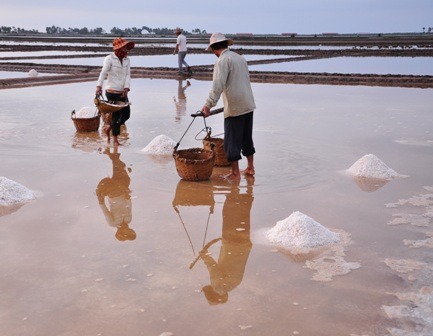
Salt Fields Kampot/Kep
Between Kampot and Kep, the salt marshes unfold their checkerboard basins. From January to May, salt workers harvest salt by hand using ancestral techniques, in a landscape that changes with the light.
Just a few kilometers from Kampot, the salt marshes stretch out in brilliant checkerboard patterns between the river and the Cardamom Hills. Exploited for centuries, they produce Cambodian sea salt, harvested by hand between January and May. The landscape shifts with the hour: blindingly white at noon, pink and gold at sunset. It is one of the rare places in the country where this artisanal craft is still practiced.
Quick Practical Info
- Access: by tuk-tuk or bicycle from central Kampot, National Road 3 toward Kep
- Entry: fields are visible from the road with no formal entrance fee; some producers welcome visitors on their land
- Best time: dry season (January–May) to see harvesting in progress
- Recommended duration: 30 to 60 minutes on site
- Clothing: hat and sun protection essential, the site is entirely exposed
What to See
Shallow basins are separated by earthen embankments. Salt workers rake crystallized salt using long wooden scrapers, then pile it into white pyramids on the banks. Buffaloes sometimes pull carts laden with salt. In the background, Mount Bokor closes the horizon to the west.
History and Context
Salt production in the Kampot region dates back to the Angkorian era. Under French protectorate rule, the industry was organized and taxed. Today, the salt marshes of Kampot and Kep remain among the last active in Cambodia, competing with imported salt. Several families perpetuate the traditional technique, passed down through generations.
Highlights of the Visit
Hand Harvesting
Between January and May, salt workers start early in the morning to avoid the heat. Watching the precise raking motion and the piles of salt grow throughout the day gives a concrete sense of the difficulty of the trade.
Sunset Over the Basins
In late afternoon, the raking light tints the water mirrors in orange and pink. It is the most photographed moment, even outside the harvest season.
Salt Pyramids
At peak season, white cones sometimes reach more than a meter in height. Some producers sell salt directly in bags to visitors.
Photography Tips
Morning light (before 9 a.m.) and evening light (after 4 p.m.) are ideal: they avoid the overexposed white of midday and create colorful reflections in the basins. A low angle from the embankments highlights the salt pyramids. During harvest season, frame salt workers at work to give scale and life to the scene.
Location and Access
The salt marshes are located mainly along National Road 3, between Kampot and Kep. From central Kampot, allow about 10 to 15 minutes by tuk-tuk. By bicycle, the road is flat and passable. No direct public transport serves the site. Accessibility for people with reduced mobility is limited: the earthen embankments are narrow and unimproved.
Nearby: old Kampot town and its colonial houses, and Kep-sur-Mer about thirty kilometers away.
Surrounding Area
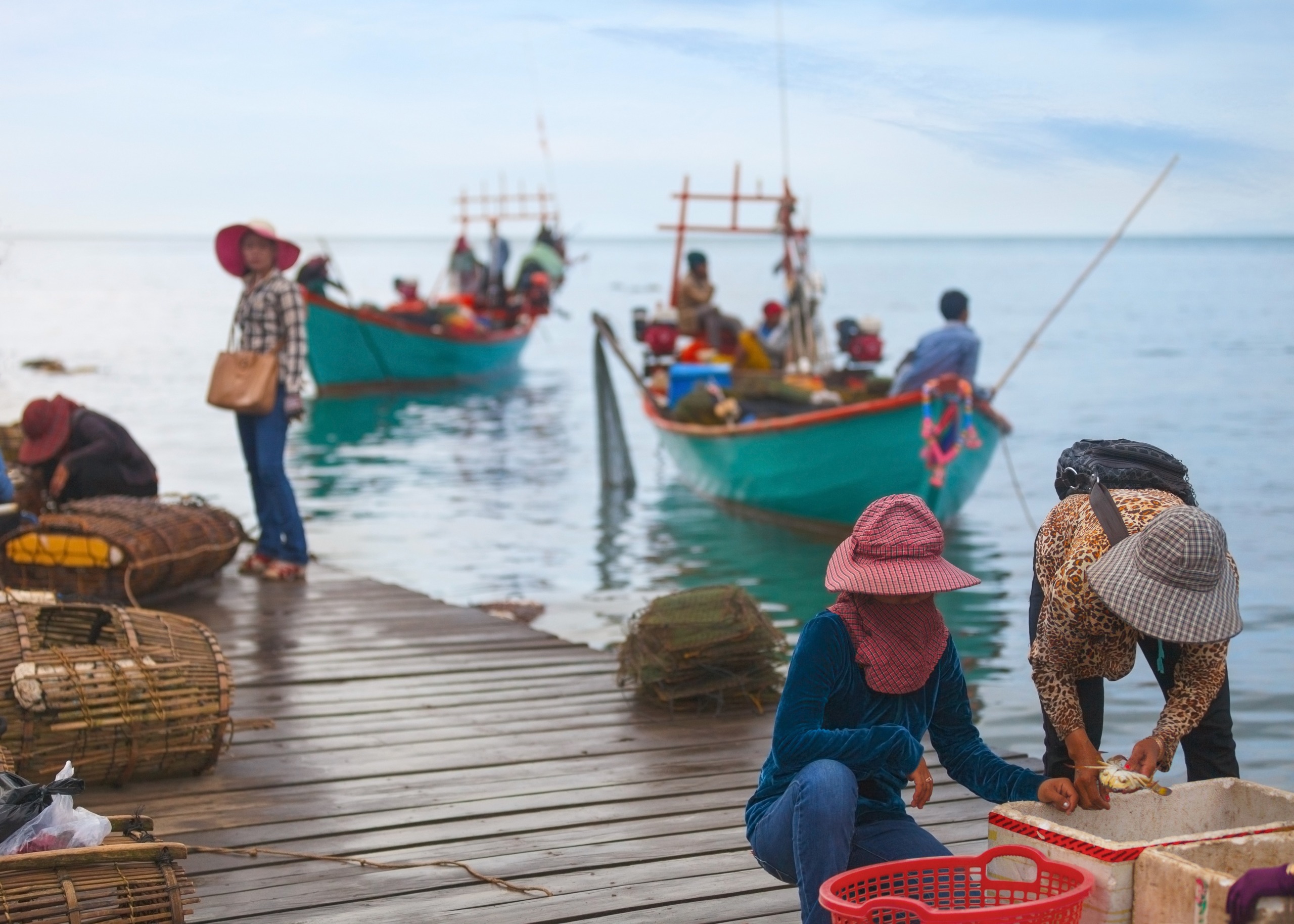
- Kep-sur-Mer — former French seaside resort, famous for its crab market and ruined villas.
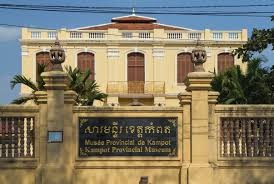
- Old Town Kampot — colonial quarter on the banks of the Kampot River, with yellow facades and cafés.
- Mount Bokor — plateau over 1,000 meters above sea level, with abandoned colonial casino and views of the Gulf of Thailand.
- Phnom Chhnork Caves — 7th-century Khmer temple sheltered in a limestone cave, a few kilometers from Kampot.
Preguntas frecuentes
The harvest season runs from January to May, during the dry season. This is the only time you will see salt workers at work and salt pyramids. In the rainy season, the basins are flooded and production stops.
Fields are visible from the road with no charge. If you wish to get closer on the embankments or talk with producers, ask permission on site. Some sell salt directly to visitors.
By tuk-tuk from downtown, or by bicycle along National Road 3 toward Kep. The road is flat and easily passable. No local buses go directly to the site.
Yes, it is a classic combination. The salt marshes are located on the road between Kampot and Kep. One day is enough to visit both, adding Kep's crab market.
No official restrictions. If you photograph salt workers up close, ask their permission as a courtesy. Morning and evening light gives the best results.
¿Te interesa esta visita?
Podemos incluirla en tu itinerario personalizado.